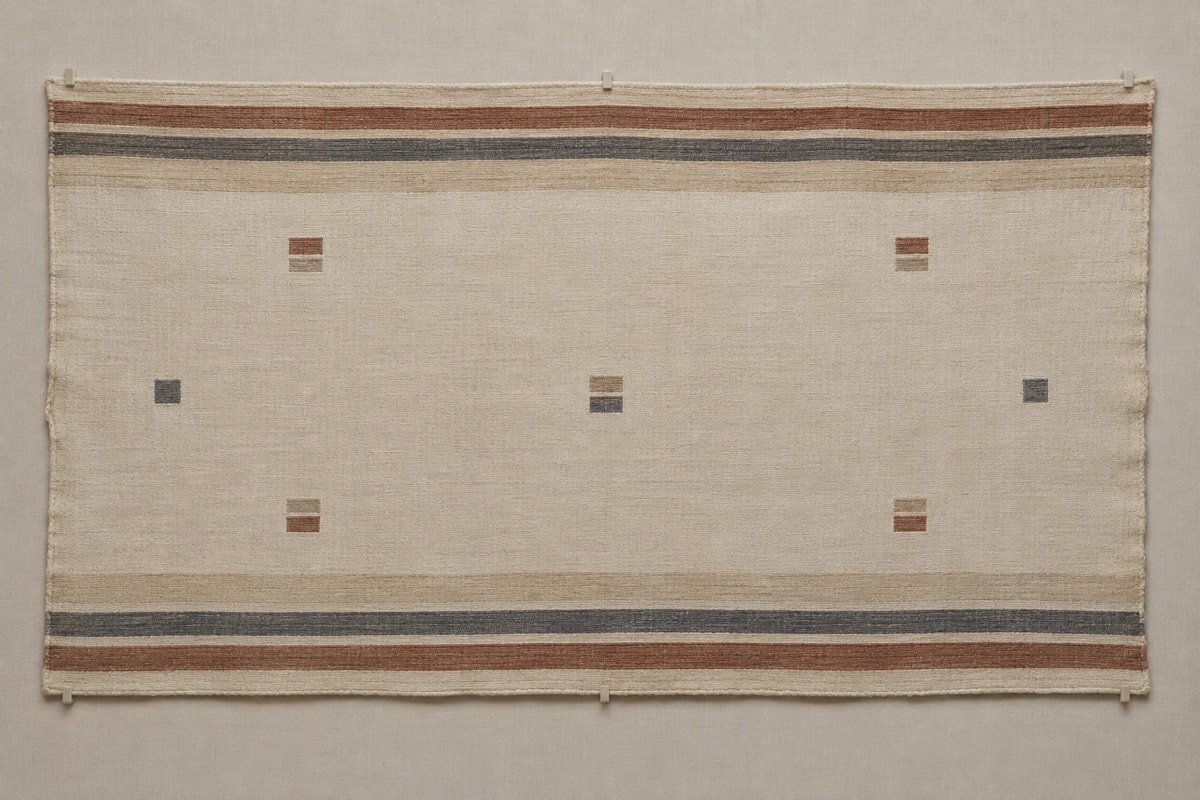
A sampler is a textile record made through practice. Early examples preserved stitch forms, borders and motifs that a needleworker could consult again. Later samplers often became organized exercises, demonstrations of accomplishment or personal records. The form never had a single purpose, which is part of what makes sampler history so useful for understanding needlework.
From working reference to composed object
The word sampler points toward the idea of a sample: a gathered set of techniques or visual units. A maker could keep successful stitches, repeat structures and decorative ideas on one piece of cloth. Over time, some examples became more deliberately composed, with regular bands, centered fields, borders, alphabets or identifying information.
The Victoria and Albert Museum's history of needlework samplers describes samplers as reference works and distinguishes spot and band forms while tracing changes in their teaching role. That distinction helps modern viewers avoid treating every old sampler as though it followed the same layout or served the same stage of learning.
Spot and band arrangements
A spot sampler distributes separate motifs or stitch trials across the ground. The spaces between them may be irregular because the cloth functions like a working notebook. A band sampler places rows of ornament or technique across the width, creating a more obvious reading order. Both arrangements can preserve information, but their visual logic differs.
Modern counted stitchers can study this structure without copying any historical object. A practice cloth might reserve one area for diagonal filling, one for a simple line stitch and one for an original geometric repeat. The value lies in recording what the hands learned, not in imitating a surviving design.
Teaching, memory and evidence
As sampler making became connected with instruction, the cloth could show control of spacing, letter formation and border planning. It might also record a maker's identifying information or a date. Such details give museums evidence about an object, but they do not tell the whole story of who made it or under what circumstances. Responsible viewing separates what is stitched on the cloth from assumptions that cannot be supported.
The Fitzwilliam Museum's textiles collection overview notes that its mainly embroidered holdings include more than four hundred English and continental samplers spanning several centuries and many needle techniques. The scale and range of that collection underline how varied the form could be.
Why the ground fabric matters
Sampler structure is inseparable from the fabric. A visible grid encourages counted placement and regular repetition. A finer ground permits smaller units and more compact lettering, while a coarser ground makes individual crossings easier to see. Uneven materials, later repairs and changes at the edges can also affect how a surviving piece appears today.
For present-day work, the fabric count guide explains how weave density changes the size of an original composition. The arithmetic is modern and practical, but the underlying relationship between thread spacing and design scale has always shaped counted needlework.
Samplers in the counted cross-stitch era
Twentieth-century pattern publishing gave sampler-inspired work a new route into homes. Printed charts could organize alphabets, borders and small motifs into reproducible counted layouts. A compact leaflet or book carried a symbol key and finishing information alongside the chart. This changed how a design traveled, even though the fundamental act remained the same: counting positions on fabric and crossing thread in a consistent direction.
The leaflet and book era looks more closely at that publishing format. The publisher history records one American company that worked within it.
Make a practice sampler without copying
A useful personal sampler can be modest. Divide a blank piece of counted fabric into three or four areas with removable basting. In each area, test a different strand count, cross direction or original border unit. Note the fabric count separately, keep the surface free of borrowed imagery and retain the cloth as a physical record of decisions.
This approach returns the sampler to a practical purpose. It becomes a reference for the maker's own tension and materials, while its arrangement acknowledges a long and varied needlework form.