Before a counted design could be stitched at home, its grid, symbols and instructions had to fit a physical publication. Leaflets and books solved that problem in different ways. Their page size, folds, photography and keys shaped how a maker encountered the design and how often the chart had to be handled at the worktable.
The focused leaflet
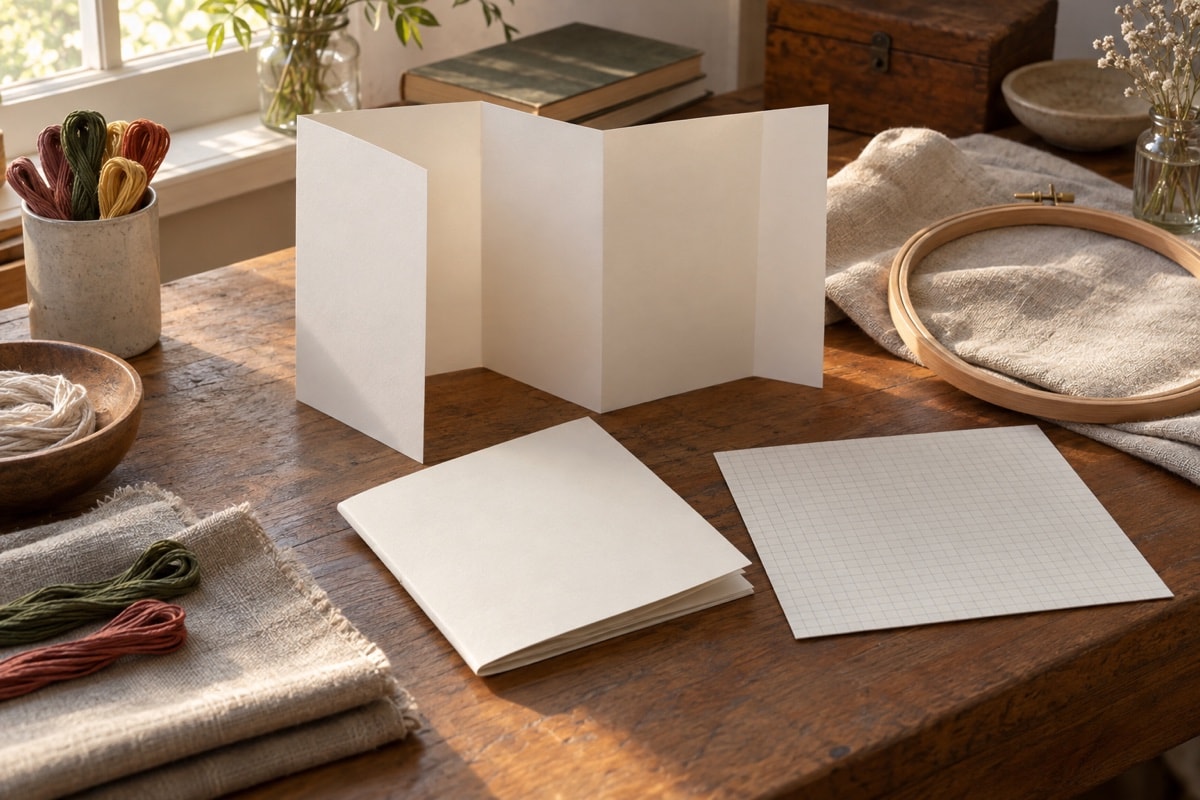
A leaflet could devote most of its space to one subject or a compact group. A large sheet folded into panels offered room for a readable chart while keeping the publication easy to file. When opened, the folds could interrupt the grid, so good page planning placed key information where it remained visible.
Leaflets also suited specialty retail distribution. A stitcher could compare a cover image and the basic project information without opening a thick volume. Once at home, the lightweight pages could sit beside a hoop or frame.
The multi-design book
A book gathered several charts under one cover and provided room for shared instructions. Repeated information about symbols, fabric preparation and basic stitches could appear once, leaving later pages for individual charts. The format encouraged browsing and gave a maker several possible projects within one physical object.
Page turns created their own challenges. A chart larger than the open spread might be divided or folded out, and the key needed to remain easy to find. Clear cross-references mattered because a stitcher could move repeatedly between chart, key and instruction page.
What a printed chart needed to communicate
A black-and-white symbol grid separated color identity from the limitations of printing. Distinct marks had to remain legible at small size. Bold lines divided long counts into manageable blocks, center arrows established alignment and a key connected each symbol with its floss description.
Stitch notation added another layer. Partial stitches might divide a square, while backstitch appeared as a line laid over the grid. The modern chart-reading guide explains how those parts work without reproducing a specific publication.
Photography and expectation
A cover photograph helped a reader understand scale, color balance and possible finishing. It was not a substitute for the chart; fabric count, stitch dimensions and material choices still determined the actual result. Photographs could also show several uses for related motifs, expanding the perceived possibilities of a compact printed item.
The physical separation between image and chart required attention. A stitcher learned to trust the symbol key for placement and use the photograph as a broad visual reference, especially when printed color varied.
Working with paper at the stitching table
Paper charts accumulated folds, pencil marks and signs of repeated use. A reader might follow a row with a straight edge, mark completed areas lightly or copy working notes onto separate graph paper. Good lighting and a comfortable working distance mattered because the eye moved constantly between the grid and the fabric.
The guide to light, posture and hands translates that worktable problem into practical setup advice. It applies equally to a compact chart and a larger folded sheet.
One publisher within the format
Designs by Gloria & Pat, Inc. published counted cross-stitch leaflets and books and distributed them through local needlework retailers. Its item identifiers show that both formats were part of its publishing activity. The independent publisher history records the established company facts without presenting a commercial listing or describing individual designs.
What the format still teaches
Printed pattern design demanded hierarchy. The reader needed to know where to begin, how to distinguish symbols, when to add line stitches and how large the result would be. Those same questions remain useful when creating an original motif today.
A blank-grid exercise can borrow the format's clarity without borrowing its imagery: title the exercise in surrounding notes, state the stitch dimensions, make a short symbol key, mark the center and test the repeat. The durable lesson of the leaflet-and-book era is not a particular design but a disciplined way of communicating counted information.